
What Is Sound Healing? How Healing Frequencies Calm the Nervous System
If you’ve recently come across sound baths, tuning forks or meditation music and wondered what is sound healing, you’re not alone. Sound healing has become increasingly popular in wellness spaces, but many people are still unsure what it actually involves or how it works.
At its core, sound healing therapy is a practice that uses vibration and frequency to support relaxation, nervous system regulation and overall well-being (source). While it may feel like a modern trend, sound has been used for healing in cultures around the world for centuries. Discover how these transformative experiences can support your emotional, spiritual, and physical growth.
In this guide, we’ll explore what sound healing is, how sound frequency healing works and what you can expect from a sound healing session.
What Is Sound Healing?
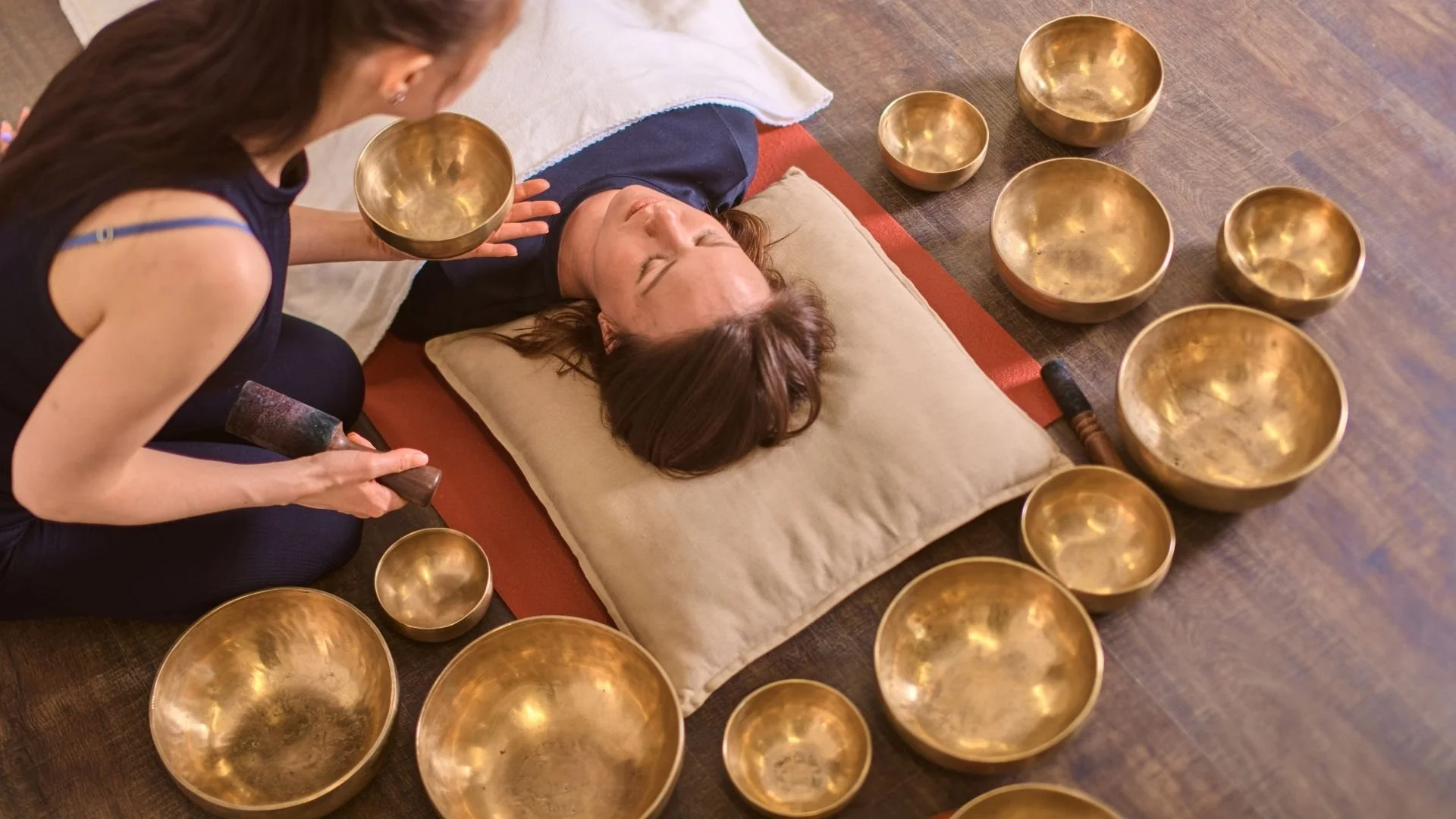
Sound healing is an ancient, holistic practice that uses sound waves produced by tools like singing bowls, gongs, and tuning forks to promote deep relaxation, reduce stress, and restore balance.
Also referred to as sound healing therapy, this approach is based on the idea that sound can help shift brainwave states, calm the nervous system, and promote a deeper sense of balance.
During a sound healing session, a practitioner uses instruments such as:
Singing bowls
Tuning forks
Gongs
Chimes
Voice or guided tones
These are all examples of sound instruments, which have been used throughout history in both ancient rituals and modern holistic therapies for their ability to produce therapeutic vibrations. Tibetan singing bowls, in particular, are traditional sound instruments known for their unique harmonic qualities and are often used to create a calming atmosphere during sessions.
The vibrations created by these sound instruments interact with the body’s energy fields and physical tissues, helping to restore balance, promote relaxation, and support emotional and physical well-being.
Unlike traditional talk-based approaches, sound healing works through sensory experience, allowing the body to relax without needing to actively “figure anything out.”
How Does Sound Frequency Healing Work?
A key concept behind this process is sound frequency healing, which refers to how different frequencies can influence the body’s state.
Everything in the body has a natural rhythm, including:
Heart rate
Brainwave activity
Breathing patterns
When the body is under stress, these rhythms can become dysregulated. Sound healing therapy introduces consistent, calming frequencies that may help guide the body back into a more balanced state.
This process is often referred to as entrainment, where the body begins to sync with external rhythms.
Certain frequencies and sound vibrations produced by instruments like singing bowls, gongs, and tuning forks are believed to promote healing by resonating with the body's natural rhythms, stimulating cellular repair, and supporting relaxation.
For example, slow, steady tones can encourage the brain to shift into more relaxed states associated with rest and restoration.
How Sound Healing Affects the Nervous System
One of the main reasons people explore sound healing is its effect on the nervous system.
Modern life often keeps the body in a constant state of stimulation. Checking our phones, the noises in our kitchen, traffic noise... the list goes on, can all lead us to feel overstimulated. Over time, this can lead to fatigue, anxiety, and difficulty relaxing. Chronic stress can negatively impact the body by increasing stress hormones, raising blood pressure, and contributing to long-term health issues. Sound healing may help address chronic stress by promoting relaxation and restoring balance.
Sound healing therapy can help support the nervous system by:
Slowing down brainwave activity
Encouraging deep relaxation
Reducing sensory overload
Creating a sense of safety and calm
Lowering stress hormones such as cortisol
Reducing blood pressure
Sound healing is effective for stress reduction and promoting relaxation, which leads to stress relief and improved overall well-being.
As the body begins to relax, it can move out of the stress response and into a more regulated state.
Many people report feeling calmer, clearer and more grounded after a session.
Types of Sound Therapy
There are several different types of sound healing, each using distinct instruments or techniques—such as guided meditation with sound, tuning fork therapy, neurologic music therapy, vibroacoustic therapy, brainwave entrainment, Nordoff-Robbins music therapy, and the Bonny Method of Guided Imagery and Music (GIM)—to achieve therapeutic outcomes.
Some of the most common approaches include:
Singing Bowl Sound Healing
Often used in sound baths, singing bowls create sustained tones that promote relaxation and meditative states. Tibetan singing bowls, crystal singing bowls, gongs, drums, and tuning forks are commonly used sound healing instruments.
Tibetan singing bowls produce a rich, harmonic sound that resonates deeply with the body and helps restore balance. These sustained tones can also help release physical tension in the body, further contributing to deep relaxation.
Tuning Fork Therapy
Tuning forks are placed near or on the body to deliver specific frequencies that may support balance and alignment.
This therapy can also help alleviate muscle tension by delivering targeted vibrations to specific areas, promoting relaxation and physical relief.
Gong Sound Healing
Gongs produce layered, complex sounds that can create a deeply immersive and meditative experience.
The immersive sounds of gongs can also support pain relief by promoting relaxation and reducing physical discomfort.
Vocal Sound Healing
Some practitioners use voice, chanting, or guided tones to create resonance and vibration within the body. Vocal toning and chanting are ancient forms of self-generated sound therapy that effectively create resonant frequencies.
Vocal sound healing can also promote emotional regulation and support emotional well-being by using resonance and vibration to help release pent-up emotions and restore emotional balance.
Binaural Beats
A more modern approach, binaural beats use headphones to deliver slightly different frequencies to each ear, influencing brainwave patterns. Binaural beats are often used to improve sleep quality by encouraging brainwave patterns associated with restful sleep.
Each type of sound therapy works in a slightly different way, but all aim to support relaxation and nervous system balance.
Sound Healing and Mental Clarity
Sound healing is more than just a relaxing experience—it’s a powerful therapeutic practice for enhancing mental clarity and supporting mental health. By harnessing the healing power of sound frequencies and sound waves, sound therapy offers a unique way to clear mental fog, sharpen focus, and restore a sense of balance to the mind.
During a sound healing session, practitioners use a variety of sound healing instruments—such as crystal singing bowls, tuning forks, and gongs—to create soothing sounds and vibrations. These sound therapy techniques are designed to gently guide the brain into calmer, more organized patterns, helping to quiet racing thoughts and reduce stress.
The way sound manifests in the human body can have a profound impact on mental well-being. Specific sound frequencies are known to promote deep relaxation, which in turn allows the mind to let go of tension and distractions. As the body absorbs these healing vibrations, many people notice a shift in their emotional state, experiencing greater mental clarity and a renewed sense of purpose.
Incorporating sound healing into your wellness routine can be especially helpful during times of overwhelm or mental fatigue. Whether through a full body listening experience in a sound bath or a focused sound meditation at home, these therapeutic practices can help you reset, recharge, and support your overall well-being.
By reducing stress and promoting emotional balance, sound healing therapy empowers you to approach daily life with greater focus, creativity, and resilience—making it a valuable tool for anyone seeking mental clarity and improved mental health.
What Happens During a Sound Healing Session?
If you’re new to sound healing, you may be wondering what a session actually feels like.
A typical sound healing session includes:
A quiet, calming environment
Comfortable positioning (usually lying down)
Gentle guidance from the practitioner
Exposure to various sound frequencies
A sound therapy session typically involves relaxing in a peaceful setting while the practitioner uses sound vibrations to help induce relaxation, facilitate emotional breakthroughs, and influence brainwave states for specific mental or physical outcomes.
Unlike active therapies, sound healing requires very little effort from you. Many people simply lie back, listen, and allow the body to respond.
Common experiences during a session include:
Deep relaxation
A meditative or dream-like state
Emotional release
Relief from physical discomfort
Emotional healing
A sense of calm or clarity
Because the experience is sensory-based, it can be especially helpful for people who feel overwhelmed by more talk-focused approaches.
Is Sound Healing Scientifically Proven?
Research on sound healing therapy is still developing, but there is growing interest in how sound and vibration affect the brain and body.
Some studies suggest that sound-based practices may support:
Reduced stress and anxiety
Improved mood
Enhanced relaxation
Better sleep quality
Enhanced immune function
Support for the immune system
Improved mental and physical health
Physical health benefits
Music therapy, a related evidence-based practice with clinical applications, has shown positive effects on emotional regulation, stress reduction, and neurological health.
While more large-scale research is needed, many of the benefits of sound healing may be linked to its ability to activate the body’s relaxation response.
Sound healing can be considered a complementary therapy that supports both physical health and mental well-being, working alongside conventional treatments to promote overall wellness.
Like many holistic practices, sound healing is best understood as a complementary wellness approach, rather than a replacement for medical treatment.
Why People Are Turning to Sound Healing
As awareness of nervous system health grows, more people are seeking practices that help them slow down and regulate.
Sound healing therapy offers a unique entry point into relaxation because it does not require effort, analysis or prior experience.
People often explore sound healing if they:
Feel overwhelmed or overstimulated
Have difficulty relaxing
Want to support their nervous system
Are interested in holistic wellness practices
Because sound healing works through vibration and sensory experience, it can be accessible to a wide range of individuals.
Many are drawn to sound healing for its healing benefits, such as reducing stress and anxiety, and supporting overall emotional and behavioral well-being.
Sound Healing in Eden Prairie, MN
If you are exploring sound healing in Eden Prairie, working with a trained practitioner can help you experience the full benefits of sound frequency healing in a safe and supportive environment.
At High Vibrations Healing MN, sound healing sessions are offered as part of a trauma-informed approach to nervous system regulation. Each session is designed to create a calm, grounding space where the body can relax and restore balance. These sessions can also support physical healing by using sound vibrations to promote bodily health and regeneration, while helping to balance the body's energy centers for overall well-being.
Final Thoughts: Is Sound Healing Right for You?
If you’ve been wondering what is sound healing or how sound healing therapy works, the best way to understand it is through direct experience.
Sound healing is not about fixing or forcing change. Instead, it provides the body with an opportunity to slow down, regulate and reconnect.
Sound healing supports healing work by promoting mental wellness and can help alleviate physical ailments through relaxation and stress reduction.
For many people, sound frequency healing becomes a valuable tool for managing stress, improving relaxation and supporting overall well-being.