
Healing Frequencies Explained: What Are Hertz Frequencies and How Are They Used in Sound Healing?
You hear sound all day long.
The hum of an air conditioner. Music in the car. Birds outside your window. Someone’s voice across the room.
But sound is more than something we hear. Sound is vibration, created by waves traveling through a medium such as air. And those vibrations can vary in frequency—which is where the term Hertz comes in.
If you’ve explored sound healing, you may have come across 432 Hz, 528 Hz, Solfeggio frequencies, tuning forks, singing bowls, or even playlists promising certain frequencies for sleep, relaxation, or healing.
So, what are Hertz frequencies? Is there really a specific frequency that can heal the body? And how are different sound frequencies actually used during a sound healing session?
As a practitioner who incorporates sound and vibration into my work, I think we can appreciate the experience of sound without making it more complicated—or more miraculous—than it needs to be.
Let’s start with what a Hertz actually is.
What Are Hertz Frequencies?
Hertz (Hz) is simply a unit used to measure frequency. One Hertz represents one cycle per second.
In sound, frequency helps determine how high or low a tone sounds. A lower-frequency sound generally produces a deeper tone, while a higher-frequency sound produces a higher pitch.
So, when you see something described as 432 Hz or 528 Hz, the number is describing the frequency of the vibration—not automatically what that sound will do to your body.
This distinction matters because the internet is filled with claims about Hertz frequencies for healing. Some have roots in spiritual or energetic traditions, while others are presented as scientific facts even when the research is much less certain.
What we do know is that sound itself can influence our experience.
Think about how differently your body responds to a sudden alarm compared with the sound of rain, gentle music, or a familiar voice.
Sound can feel activating, comforting, distracting, grounding, or deeply relaxing.
That relationship between sound, vibration, attention, and the body is part of what makes sound healing so interesting.
What Are Sound Healing Frequencies?
The phrase sound healing frequencies generally refers to specific tones or ranges of sound used intentionally during meditation, relaxation, or complementary wellness practices within a sound healing tradition that has existed for thousands of years (source).
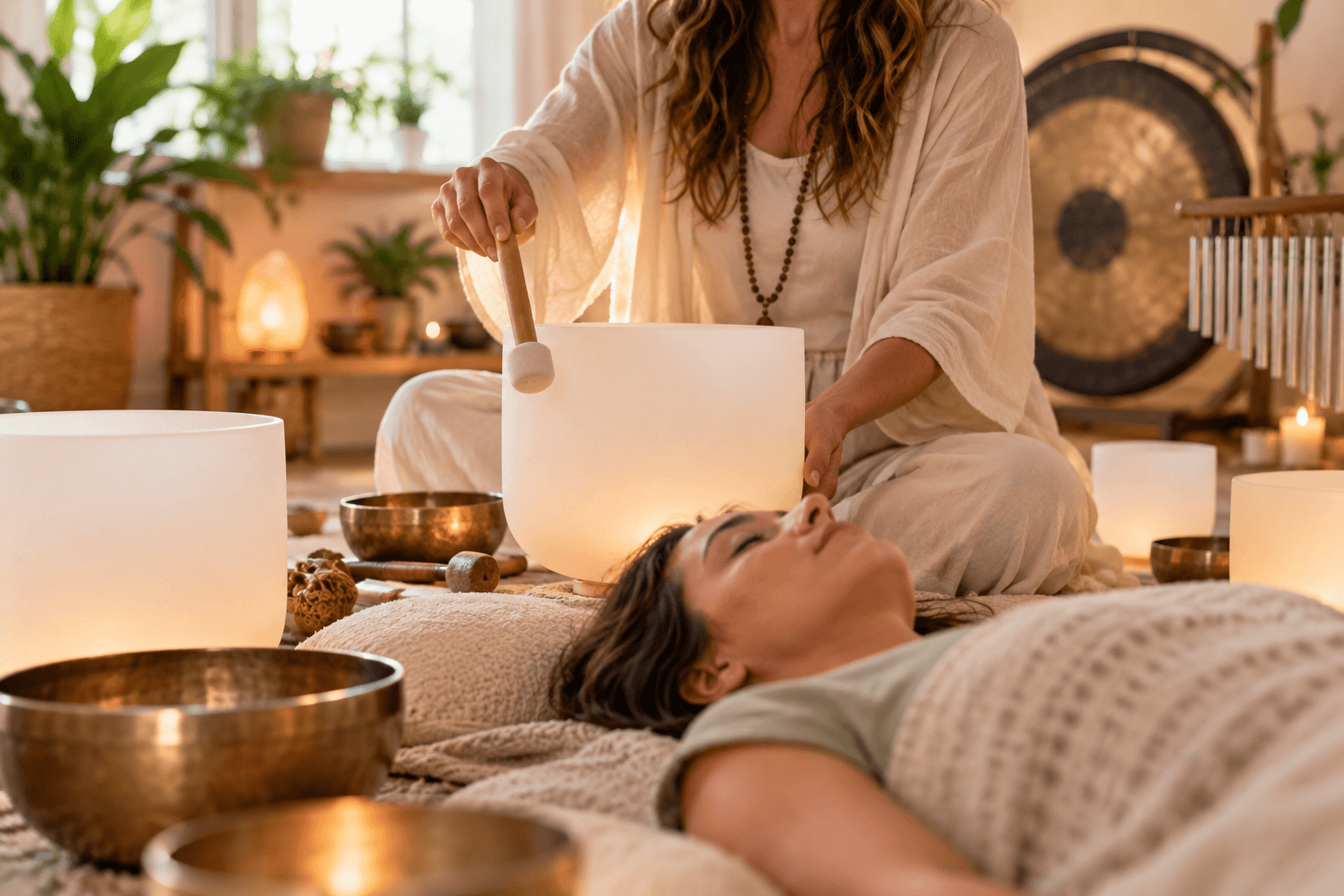
Depending on the practitioner and type of sound healing therapy, these frequencies may be produced using instruments such as:
Tibetan singing bowls
Tuning forks
Gongs
Chimes
Drums
Vocal tones or chanting
Recorded music or digital tones
Gongs are among the oldest sound healing instruments, and crystal singing bowls are also commonly used to help retune chakras and promote balance. Ancient Egyptians used musical incantations for healing, and Greek physicians used musical instruments to heal patients.
Some practices focus on the physical experience of vibration. Others incorporate an energetic or spiritual understanding of frequency.
In my work at High Vibrations Healing, sound isn't about finding one magical frequency that “fixes” the body. It is another tool we can use to create an environment where you can slow down, notice what you're experiencing, and become more receptive to rest.
RELATED: Curious about what a full session involves? Explore Sound Healing in Eden Prairie to learn more about tibetan bowls, tuning forks, Biofield Tuning, and the other sound-based practices I incorporate into my work.
Why Can Sound Feel So Powerful?
You don't need to understand acoustics to know that sound can change the feeling of a room—or the feeling inside your body.
A loud, unpredictable noise can immediately grab your attention. A steady rhythm or soothing piece of music may have the opposite effect.
Research more broadly examining music and natural sounds has found associations with changes in anxiety and physiological measures such as heart rate and blood pressure, although the effects vary by the type of sound, person, and study. PubMed For some people, listening to healing frequencies may also influence mood and stress levels.
This is one reason I don't think of sound healing as something you have to believe in for it to be worth exploring, even though healing frequencies are not scientifically proven to cure illnesses.
You can simply notice:
What happens in my body when I hear this?
Do your shoulders soften?
Does your breathing change?
Do you become more aware of an area where you're holding tension?
Do you feel calmer—or does a particular sound actually feel uncomfortable?
Those responses are information.
And from a trauma-informed perspective, your individual response matters more than what someone on the internet says a particular frequency is supposed to make you feel.
What Is the 432 Hertz Frequency?
Of all the frequencies associated with wellness, 432 Hz may be one of the most familiar.
You may see 432 Hz described online as a “healing frequency,” a frequency of nature, or a frequency that can restore harmony to the body; it is also often described as calming and steady.
The reality is more nuanced.
When people talk about 432 Hz music, they're often referring to music tuned with A4 at 432 Hz rather than the common modern concert standard of A4 = 440 Hz, which became the standard tuning pitch in the mid-20th century.
There has been some preliminary research comparing music tuned to these frequencies.
A small double-blind crossover pilot study involving 33 adults compared the same music tuned to 432 Hz and 440 Hz. The researchers observed a greater reduction in heart rate during the 432 Hz sessions, along with greater listening satisfaction, but emphasized the need for larger randomized studies. Some listeners also find 432 Hz more relaxing than 440 Hz, and early findings suggest listening may reduce cortisol levels. (PubMed)
A later randomized crossover study involving 43 cancer patients compared sound interventions tuned to 432 Hz and 443 Hz. Both were associated with improvements in emotional well-being and reductions in fatigue, anxiety, and stress, while some cardiovascular measures differed between conditions. Again, these findings are interesting, but they don't establish 432 Hz as a treatment for disease or prove many of the broader claims you'll find online (PubMed) More scientific research is needed, and there is no scientific proof that 432 Hz is better than 440 Hz.
What are the potential 432 Hertz frequency benefits?
Based on the research we currently have, it is more appropriate to talk about 432 Hertz frequency benefits in terms of potential relaxation, stress support, and emotional balance rather than claiming that the frequency heals specific conditions.
For some people, music or sound tuned to 432 Hz simply feels calming and pleasant.
And sometimes, that experience is valuable in itself. Many listeners simply experience 432 Hz as calming, even though that response is subjective.
What About 528 Hertz Frequency Benefits?
Another frequency you'll frequently encounter is 528 Hz, sometimes referred to in modern wellness communities as the “love frequency” or a Solfeggio frequency.
Claims about the 528 Hertz frequency benefits range from relaxation and improved mood to much more dramatic claims about cellular or DNA repair.
This is where it's especially important to separate emerging research from marketing.
There is some research exploring physiological responses to 528 Hz and other frequencies, including recent work comparing exposure to 432 Hz and 528 Hz music. However, research into frequency-specific effects remains an emerging field, and larger, higher-quality studies are needed before we can confidently assign specific health outcomes to individual frequencies. A recent review similarly concluded that frequency-based interventions show potential but emphasized methodological differences and the need for more robust research. PubMed
So, while I may incorporate specific frequencies into sound work, I don't think we need to promise that 528 Hz is repairing DNA—or that any one frequency is doing something magical—to recognize that sound can be a meaningful part of a restorative experience.
What Are Solfeggio Frequencies?
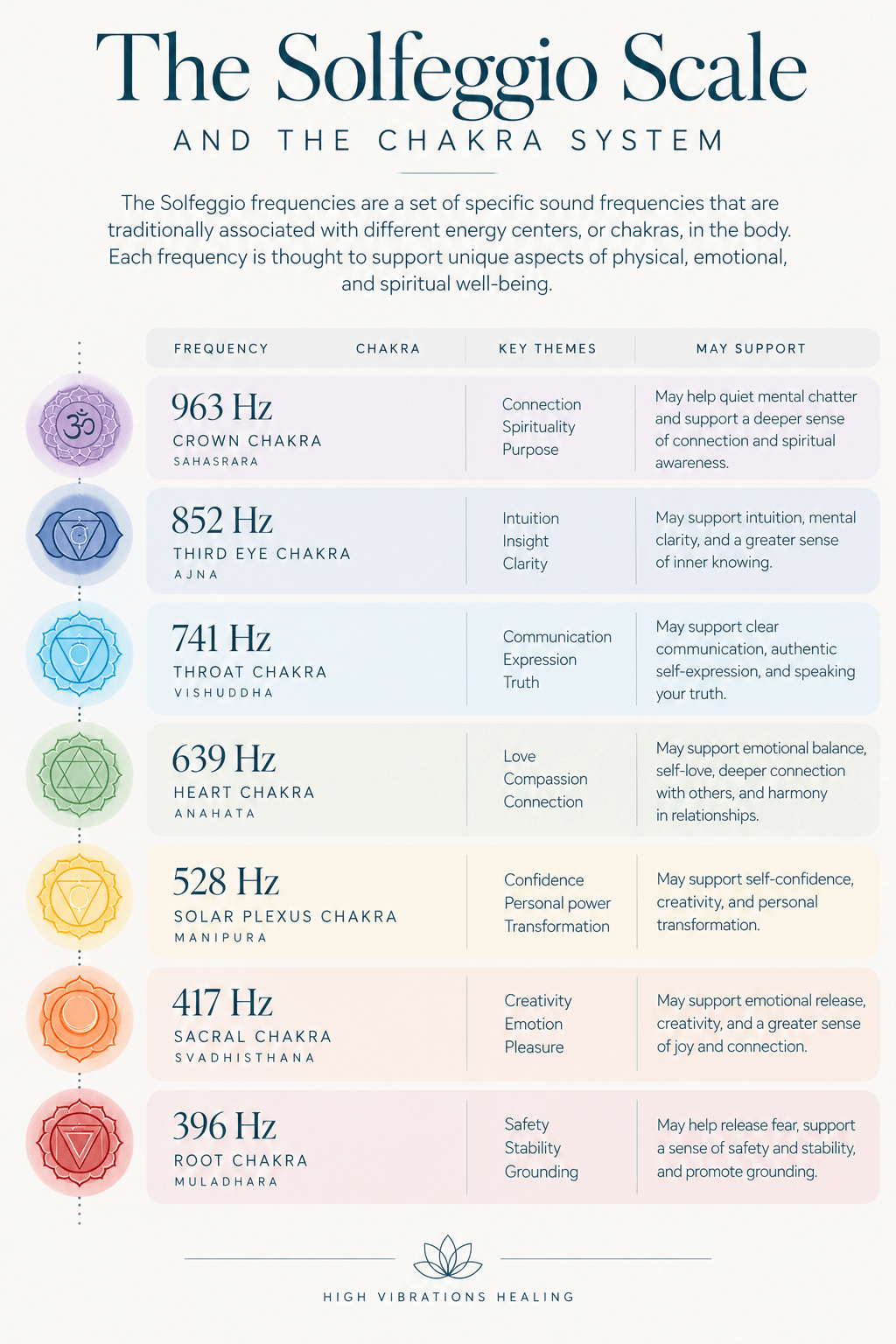
If you've searched for sound frequencies for healing, you've probably encountered something called the Solfeggio frequencies.
Modern Solfeggio frequency systems commonly associate particular frequencies with different emotional, energetic, or spiritual intentions.
You may see frequencies such as 396 Hz, 417 Hz, 528 Hz, 639 Hz, 741 Hz, and 852 Hz paired with concepts like releasing fear, transformation, connection, intuition, or spiritual awareness.
Claims that these exact values were used in ancient times are anachronistic, and ancient civilizations did not use hertz-based measurement for healing frequencies, so modern labels like these shouldn't be projected backward.
These associations are popular within modern sound-healing communities, but they shouldn't be interpreted as established medical effects of those frequencies.
I prefer to think of them as one framework for working intentionally with sound.
A particular tone may become a point of focus during meditation or energy work without requiring us to claim that it produces one predictable biological result in every person.
Sound Healing Tuning Forks: Bringing Frequency Into the Room
One of my favorite sound healing tools is also one of the simplest: the tuning fork.
A tuning fork is designed to vibrate at a particular frequency when activated, and tuning forks are widely used for their powerful and pure frequencies.
During sound healing with tuning forks, the fork may be used around the body or within the body's energetic field. Depending on the approach, different frequencies may be selected for different intentions, including support for pain relief.
Tuning forks provide a very focused form of sound compared with the layered tones of a singing bowl or gong.
For some people, that focused vibration makes it easier to notice subtle changes in sensation, tension, or awareness, and may help release tension in a very focused way.
At High Vibrations Healing, tuning forks can also be incorporated into Biofield Tuning, an energy-based approach that uses sound within and around the body's biofield.
What Other Sound Healing Instruments Are Used?
Different sound healing instruments create very different sensory experiences.
Singing bowls can produce rich, sustained tones with multiple overtones. Gongs create layers of vibration that can fill an entire space. Chimes, including koshi chimes, offer lighter, higher-pitched beautiful sounds, while drums introduce rhythm; ocean drums are another option because they mimic the sound of ocean waves for relaxation.
Tuning forks offer something different again: a specific, controlled frequency.
There are also digital Hz frequency generators that produce precise tones through speakers or headphones.
None is inherently “better.”
The right sound healing tools depend on the person, the purpose of the session, and how their body responds.
This is another reason a personalized experience is very different from simply searching for a frequency online and pressing play.
Can Sound Waves Help With Sleep?
Search for sound waves for sleep, and you'll find an almost endless selection of white noise, nature sounds, binaural beats, frequency tracks, and sleep music.
There is a reason sound is so commonly incorporated into bedtime routines.
Consistent, calming audio can help create an environment associated with winding down, while some sounds can also mask unpredictable environmental noise and may help some people manage stress at bedtime.
But again, there isn't one universal “sleep frequency.”
The sound that helps one person settle may be distracting to someone else, though some people also use low frequency tracks for deep relaxation.
RELATED READING: If sleep and anxiety are your primary concerns, read Can Sound Healing Help With Sleep and Anxiety?, where I go deeper into binaural beats, sleep frequencies, singing bowls, and relaxation.
Are There Really Sound Frequencies for Healing?
This is probably the biggest question.
And my answer is: it depends on what we mean by healing.
If we mean that listening to one exact Hertz frequency has been proven to cure disease, repair DNA, release trauma, or create the same physiological change in every person, the evidence isn't there, and many claims about frequency-based healing go well beyond what the evidence currently supports.
Research into specific frequencies such as 432 Hz and 528 Hz is intriguing but still limited. Even recent reviews describing promising findings emphasize the need for larger and more rigorous trials. PubMed More rigorous scientific research is still needed before specific healing properties can be confirmed.
But if we use healing more broadly—to describe creating space for rest, connection, reflection, body awareness, and emotional well-being—the conversation becomes much more interesting.
Sound can be part of that environment.
It may support healing and reduce stress, but it should not be treated as a quick fix or a standalone medical treatment.
And in my experience, it becomes especially powerful when it's not treated as an isolated cure but incorporated thoughtfully alongside other supportive practices. That helps explain why anecdotal evidence can feel meaningful and why the placebo effect may shape subjective benefits even when frequency-specific cures remain unproven.
Sound Healing as Part of a Whole-Person Approach
I rarely think about one modality in isolation.
During a session, sound may be incorporated alongside Reiki, somatic wellness, Transforming Touch, chakra work, or other practices depending on the individual and what feels appropriate.
That combination matters.
Sound can also be used to support mental health and nervous system regulation as part of a broader, integrated approach.
A person isn't just a nervous system.
Or an energetic body.
Or a collection of muscles and tissues.
We're complex, interconnected human beings, and my approach leaves room for the human body, physical health, physical, emotional, and energetic experiences without assuming they are all the same thing, including outcomes some people seek like emotional connection or mental clarity.
EXPLORE MORE: Read What Is Holistic Healing? A Nervous System Approach to Lasting Wellness for a deeper look at how these different modalities can work together.
Sound Healing in Eden Prairie, MN
You don't need to understand Hertz frequencies, own a set of tuning forks, or know which sound you “need” before experiencing sound healing.
At High Vibrations Healing MN, sessions are individualized, guided by a trained practitioner rather than passive listening at home, and may incorporate tuning forks, singing bowls, Biofield Tuning, Reiki, somatic practices, and other forms of sound and energy work based on what feels supportive for you.
After more than 25 years working in trauma-informed care, I've learned that healing doesn't always begin with doing more.
Sometimes it begins by giving the body an opportunity to experience something different, which for some people may help reduce pain, ease muscle tension, or lower stress without promising any specific outcome.
If you're curious about sound healing therapy in Eden Prairie or the Twin Cities, I invite you to learn more about my approach or reach out with questions.
About the Author
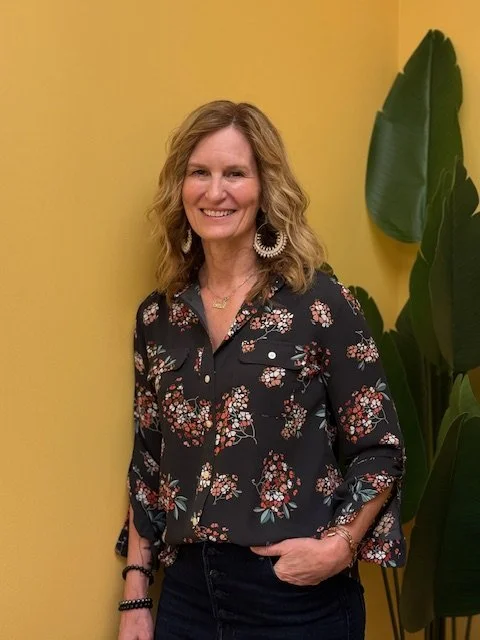
Emily Benson is a holistic wellness practitioner with more than 25 years of experience in trauma-informed care. Through High Vibrations Healing, she integrates somatic practices, energy healing, sound, and touch-based modalities to help clients reconnect with their bodies and experience greater calm, connection, and balance.